
Fishing in Puerto Vallarta for First-Timers: How to Book Without Getting It Wrong
No experience, no gear, kids in the group? A plain-English guide to booking your first fishing charter in Puerto Vallarta — how long, which boat, and what it really costs.

If you have never booked a fishing trip before, the offers in Puerto Vallarta are genuinely confusing. Some are sold per person, some per boat. Some quote four hours, some eight. Some name a destination you have never heard of. This guide strips it back to the four decisions that actually matter, using the three boats at Ol' Salty's Ranch, the operation we send readers to for fishing in Puerto Vallarta.
The Good News First: You Do Not Need Anything
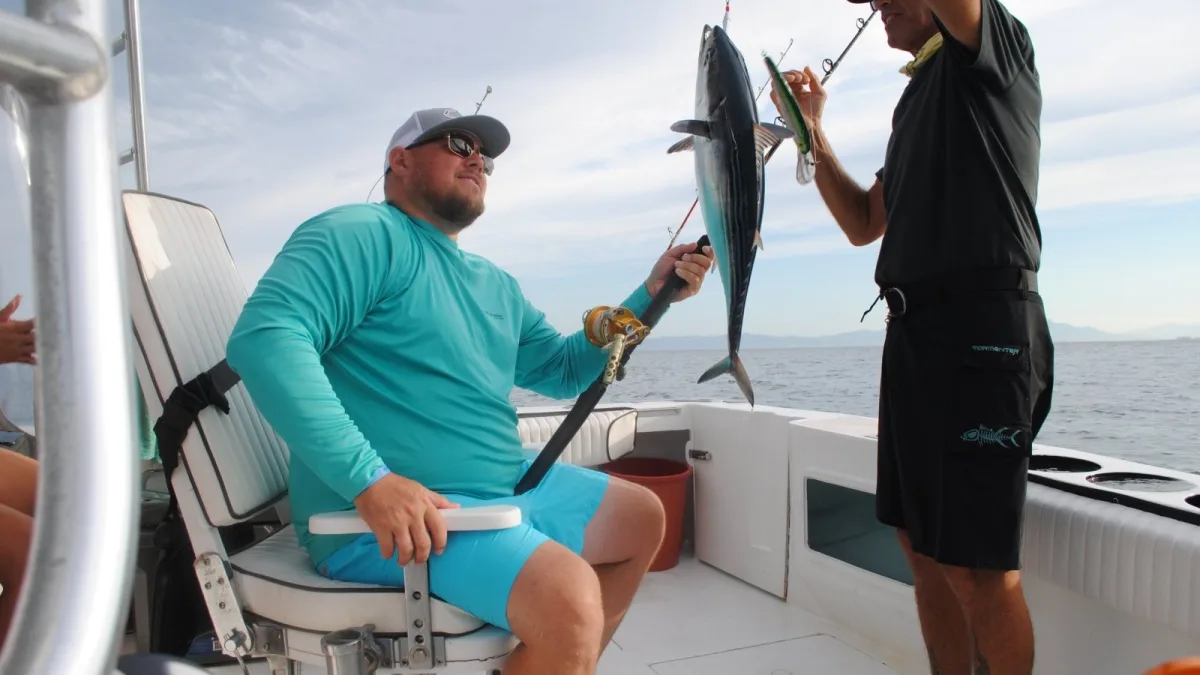
No experience, no gear, no licence in your pocket at the dock, no idea what a spread is. Rods, tackle and bait are on the boat. The mate sets the lines, and when something hits he clears the other rods, hands you one, and coaches you through the fight. The captain reads the water from the tuna tower — birds working, a colour change, a fin — which is the part of fishing that takes twenty years to learn and is precisely what you are paying him for.
The one thing to check is the fishing licence. Mexico requires a sport fishing licence for anglers aboard a sport fishing vessel, and it is listed as not included in the hourly rate, so ask at booking whether the operator arranges it for your group.
Decision 1: How Many Hours
This is the single most important choice, because the hours decide where you fish. The boats are booked by time, not by destination.
- 4–6 hours — inside Banderas Bay. Calmer water, short runs, steady action. This is the right answer for a first trip.
- 6–8 hours — just outside the bay. Five to eight miles beyond the mouth, bigger fish on average, and where a second-timer usually goes.
- 8–10 hours — Corbeteña. A serious offshore day at a rock pinnacle northwest of the bay.
- 10+ hours — El Banco. The long one, out to a seamount known for big tuna and billfish.
- Multi-day — one to three days. Only aboard Steel n Time, the one boat with berths.
The temptation for a first-timer is to book long, on the theory that more hours means more fish. It usually does not. It means more running, more open water, more chance of somebody being seasick, and a very long day for anyone in the group who was only ever half interested. Start at four or six hours inside the bay.
Decision 2: Which Boat
All three fish. Choose by group size, comfort and how far you are going.
Guanatuna — 34 feet, up to 15 guests, 3,200 MXN/hour
Twin turbo 250 HP Cummins diesels, which keep her steady in a chop. Her whole main deck sits under a shade canopy with cushioned lounge seating, with the bow open for sun. She is the cheapest per hour and the most forgiving choice for a mixed group where half the party is fishing and half is not. Open-air, so the breeze does the cooling.
Peaceful Easy Feeling — 32 feet, up to 8 guests, 4,000 MXN/hour
Twin Mercury 300 HP outboards, Furuno GPS and fish finder, canopy over the console, open bow, bathroom aboard. Fast, which matters more the further you go: the time you do not spend running is time you spend fishing.
Steel n Time — 53 feet, up to 22 guests, 7,000 MXN/hour
A proper sport fisher with 900 HP of Detroit diesel, sonar and radar, three air conditioners, a salon, two bathrooms and berths for eight. Big groups, full offshore days, and the only multi-day option. On a hot afternoon with a wide age range aboard, the air-conditioned salon is what everyone remembers.
Decision 3: What It Costs
Rates are per boat, per hour — nothing per person. That is unusual, and it is good news for groups. Four hours on Guanatuna is 12,800 MXN for the entire boat. Split six ways that is roughly 2,130 MXN each; split ten ways, about 1,280 MXN each, for a private boat with a private route.
Below about four people a shared group tour is normally cheaper. From six up, the private charter usually wins on price and always wins on flexibility — nobody else's schedule, nobody else's music, and a route built around your day. If you are still weighing it up, our guide to boat tours and yacht rentals compares the shared options.
Reservations are held with a 30% deposit, departures run from 7:00 a.m. to 7:00 p.m., and cancellation is free up to 24 hours before.
Decision 4: What You Are Fishing For
Tell the crew this at booking, because it changes the route, the tackle and the departure time.
If you want the kids to catch something: ask for bonito, jack crevalle and the inshore species. They bite often and pull hard, and a child who lands three fish has had a far better morning than one who waited six hours for a marlin that never came.
If you want a photograph of a billfish: sailfish are the realistic target and the better show. Plan eight hours or more, and go between roughly May and November.
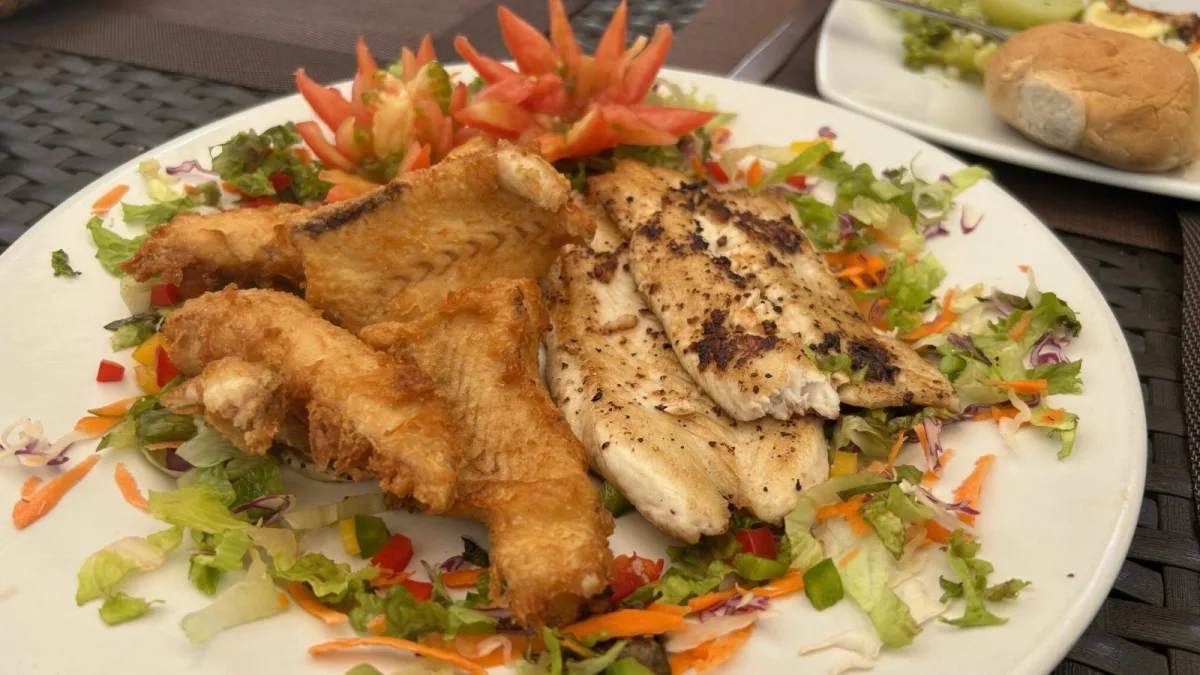
If you want to eat what you catch: dorado and yellowfin tuna. Dorado in particular is superb, and the crew will clean your catch at the dock. Plenty of restaurants around the marina will cook it for you.
The Five Things That Actually Ruin a First Charter
Not one of these is about fishing, and every one of them is avoidable.
1. Seasickness taken too late. Motion sickness medication works if it is in your system before you leave the dock. Taken once you feel it, it is largely decorative. If anyone in the group is uncertain, take something anyway and book inside the bay.
2. Sun. Open water reflects, and you are getting the dose twice. Reef-safe sunscreen reapplied hourly, a hat with a brim, and a light long-sleeve layer — the sort of shirt the crew wears — beat a bottle of factor 50 applied once at 7 a.m.
3. Booking too many hours. Covered above, and it is the mistake first-timers make most. Ten hours is not five times better than four; it is a different kind of day, and it is a long one for anybody in the group who was only half interested.
4. Not saying what you want. The crew cannot read minds. A route built around billfish and a route built around keeping three children entertained have almost nothing in common.
5. Arriving late. A 7 a.m. departure means 7 a.m. From the Zona Romántica the drive to Marina Nuevo Vallarta is thirty to forty minutes depending on traffic, and it is dark when you leave. Give yourself a margin.
What Happens to Your Catch
Billfish are photographed alongside the boat and released — that is standard practice here, and a good crew does it quickly so the fish swims away strong. Edible species are yours: dorado, tuna, bonito and the rest get cleaned by the crew at the dock, bagged, and handed over. Bring a cooler bag if you have a kitchen; if you do not, walk into almost any restaurant around the marina or in town and they will cook it for you. For most first-timers that dinner turns out to be the best meal of the trip.
What the Day Actually Looks Like
The first half hour is the dock: paperwork, safety briefing, cooler aboard, lines off. Then the run out, anywhere from twenty minutes to over an hour depending on how far you bought. The mate sets a fan of trolled lines behind the boat and the captain climbs the tower and starts reading water. Long stretches are quiet. Then something hits and everything happens at once.
The last part of most charters is not fishing at all — a swim, a snorkel stop, lunch at anchor somewhere like Las Ánimas — which is only possible because you rented the boat rather than bought a seat on somebody's timetable.
What You Can Realistically Expect in Four Hours
Managing expectations is most of what makes a first charter good, so here is the honest version. Inside Banderas Bay on a four-hour trip you are fishing for bonito, jack crevalle, sierra, snapper and roosterfish. These are real fish that pull hard, land in a reasonable time, and — apart from the roosterfish, which is normally released — eat very well. A good morning is several fish spread across the group rather than one trophy.
Sailfish and marlin are possible on a short trip and they do happen, but planning a first charter around them is how people end up disappointed. If a billfish is genuinely the goal, book eight hours or more, go between roughly May and November, and treat the fish as a bonus rather than the deliverable. Dorado and yellowfin tuna sit in between: reachable on a six-to-eight-hour trip just outside the bay, and the pair most worth targeting if you want to eat what you catch.
One more thing worth knowing. Long quiet stretches are normal and are not a sign that anything is wrong. Trolling is mostly waiting, punctuated by thirty seconds where everything happens at once. Bring something to drink, enjoy the fact that you are on a boat in one of the largest bays in the Pacific, and let the crew work.
One Season Note
Between roughly mid-December and the end of March, humpback whales fill Banderas Bay. The operator treats whale watching as something you fold into a fishing day rather than a separate ticket: fish, stop when whales appear, then fish again. For a first-time group in winter, that combination is close to unbeatable — see our whale watching planning guide for the season detail.
The Short Version
- Book four to six hours inside the bay for a first trip.
- Pick Guanatuna unless you are a small serious group (Peaceful Easy Feeling) or a large one (Steel n Time).
- Expect to pay per boat per hour with a four-hour minimum, and split it.
- Tell the crew what you actually want out of the day.
- Sunscreen, hat, polarised sunglasses, seasickness tablets before boarding.
Rates, boats and availability are all on the Ol' Salty's Ranch fishing page.
FAQ
Do I need experience to go fishing in Puerto Vallarta?
No. Rods, tackle and bait are aboard, and the mate rigs the lines and hands you the rod when a fish hits. Plenty of the people who book these charters have never held a rod before.
How long should a first fishing charter be?
Four to six hours, inside Banderas Bay. The water is calmer, the run home is short, and the inshore species bite steadily — which matters far more on a first trip than the chance of a trophy fish.
Can children go on a fishing charter?
Yes, and many families do. Keep it short, keep it inside the bay, and target the species that bite often. A child who lands three bonito has had a much better day than one waiting six hours for a marlin.
What does a fishing charter cost in Puerto Vallarta?
Ol' Salty's Ranch charges per boat per hour, not per person: 3,200 MXN for Guanatuna (up to 15), 4,000 MXN for Peaceful Easy Feeling (up to 8) and 7,000 MXN for Steel n Time (up to 22), with a four-hour minimum.
What should I bring on board?
Reef-safe sunscreen, a hat, polarised sunglasses, a light long-sleeve layer, whatever you want to eat and drink, cash for the crew tip, and seasickness tablets taken before you leave the dock.
Do we keep the fish we catch?
Edible species such as dorado, tuna and bonito are yours, and the crew cleans them at the dock. Billfish — sailfish and marlin — are photographed and released.
Related Articles

Planning a Group Yacht Day in Puerto Vallarta for 15 to 30+ Guests
Reunions, milestone birthdays, wedding weekends, company outings: how to pick a boat that legally fits your whole group, which marina to use, what it costs per head and how to keep 30 people fed, shaded and on schedule.

Private Boat Rentals in Puerto Vallarta for Families and Groups: A First-Timer's Playbook
A private boat gets cheaper the more of you there are. Six rules for group charters — capacity, boat type, per-head math, the slowest person, food and the right dock — with real owner-direct numbers.

First Time Sportfishing in Puerto Vallarta: What Beginners Should Know Before Booking
Inshore or offshore, what it costs, what happens at 6:30 a.m. on the dock, what to bring and the mistakes to avoid — a beginner's guide to fishing charters on Banderas Bay.

Your First Yacht Charter in Puerto Vallarta: Mistakes to Avoid and What to Expect
Book the hours before the boat, trust only the certified capacity, read the included line, bring cash for the crew — the first-timer's guide to a day on Banderas Bay.